

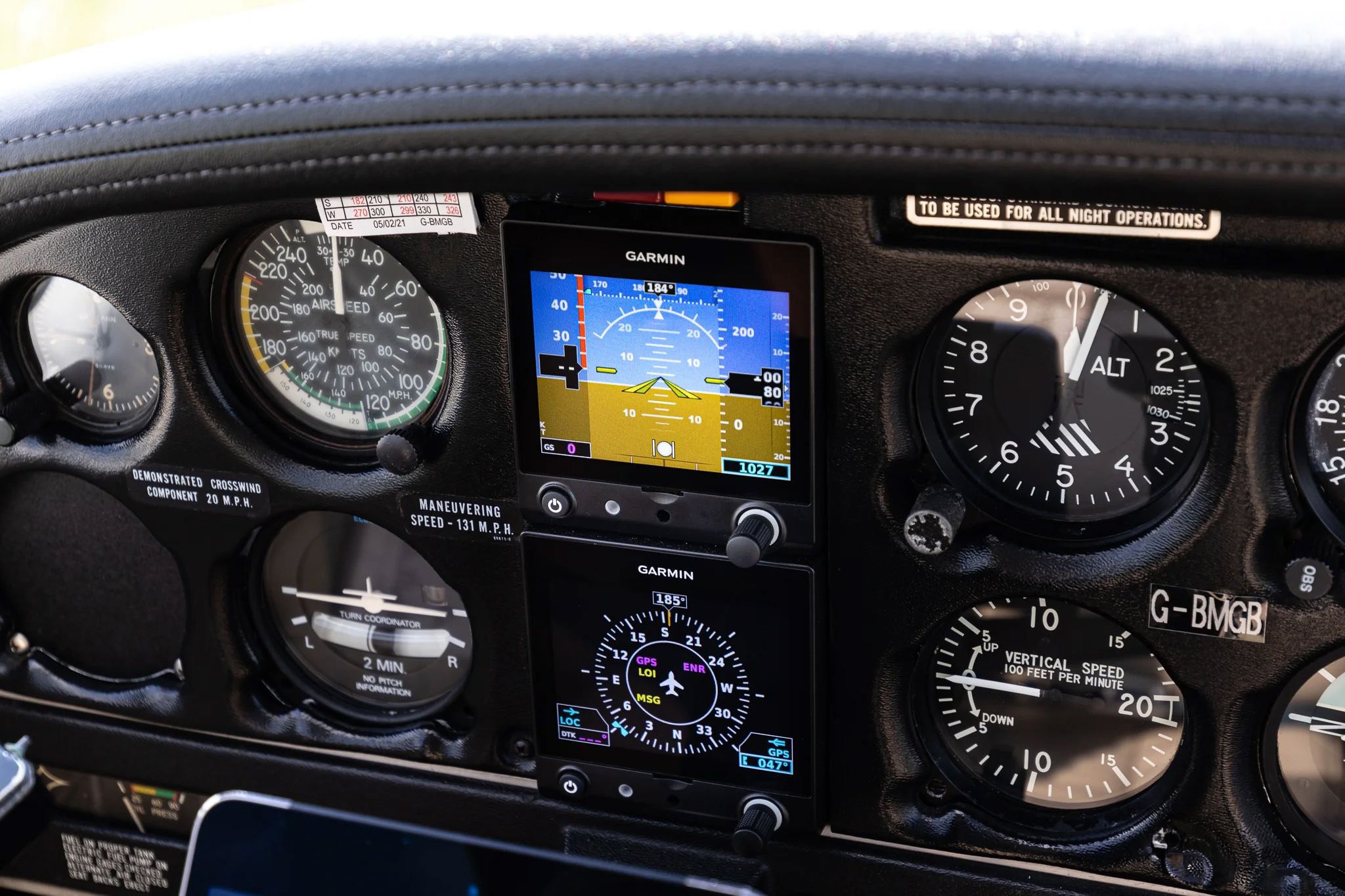
IR(R) / IMC
Fly in Instrument Meteorological Conditions
Overview
IR(R) / IMC
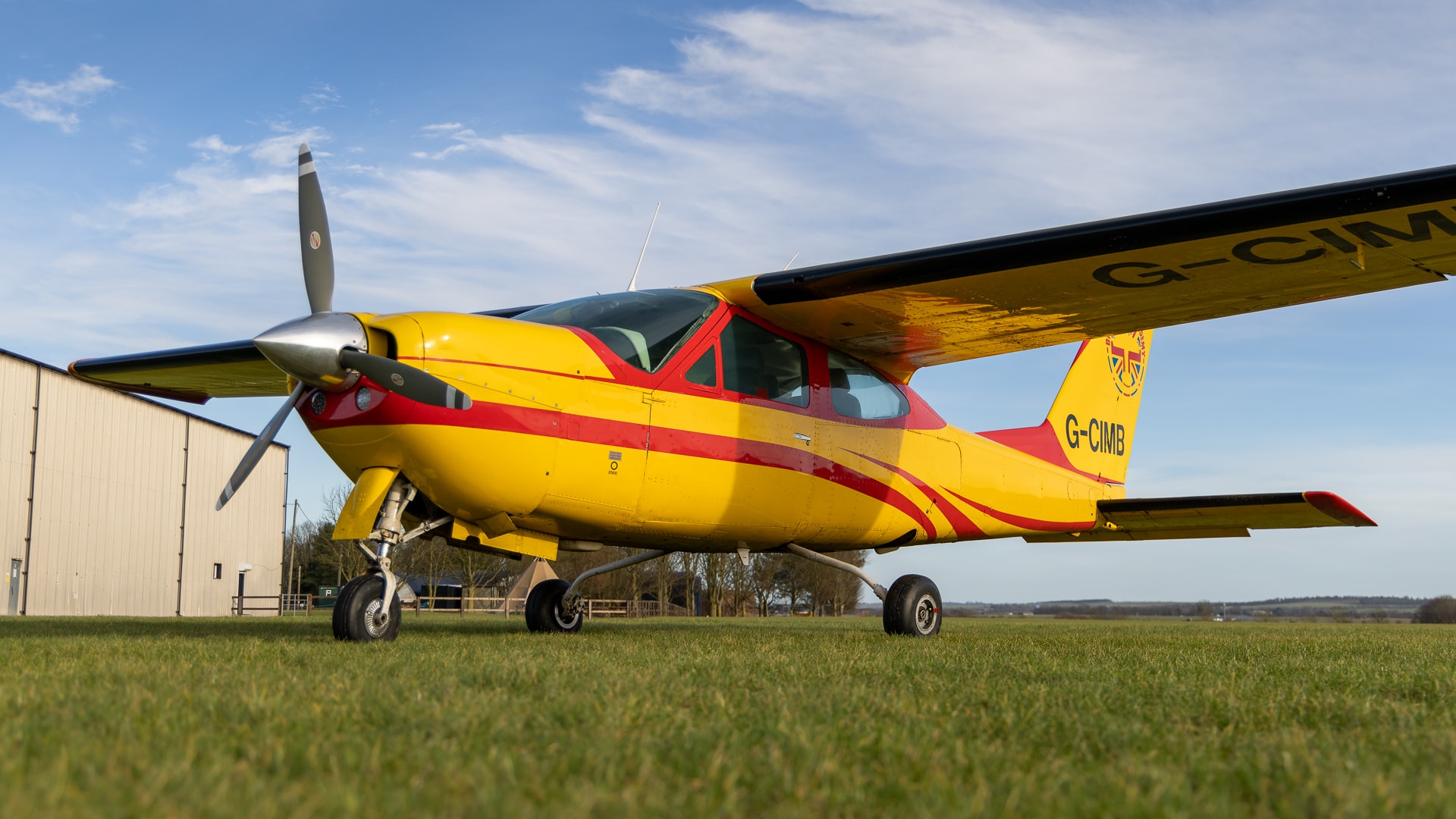
Flight instruction and theoretical knowledge per CAP 804 Part E — written exam and skill test for the IR(Restricted). The course is normally conducted in our well-equipped Cessna 177RG Cardinal.
Timeframes
Timelines and Duration.
15h
Hours flight training (SEP or MEP class)
1.5h
Hours skill test (approx., additional to syllabus)
20h
Hours typical self-study ground minimum
5
Days typical full-time minimum
Costs
Course Pricing.
Course price
£4,905
Includes in-house theory exam fee. Excludes landing and approach fees.
Price includes
- 15 hours flight training in SEP or MEP class per syllabus
- Pre- and post-flight briefings factored into flying costs
- In-house theoretical knowledge exam fee
Price excludes
- Landing fees at Fowlmere and other airfields
- Approach fees at Cambridge or Cranfield
- Skill test — charged at hourly rate (approx. 1.5h, in addition to syllabus hours)
- Optional formal classroom ground school if specifically requested
- Additional £25/hr when training for EASA licence in parallel
- Extra ground school beyond that needed for the flying syllabus, if required
Ground school is self-study; formal classroom lessons are not part of the standard course unless requested. The course is normally conducted in our Cardinal RG. Additional charges apply for approaches at Cambridge or Cranfield.
Aircraft
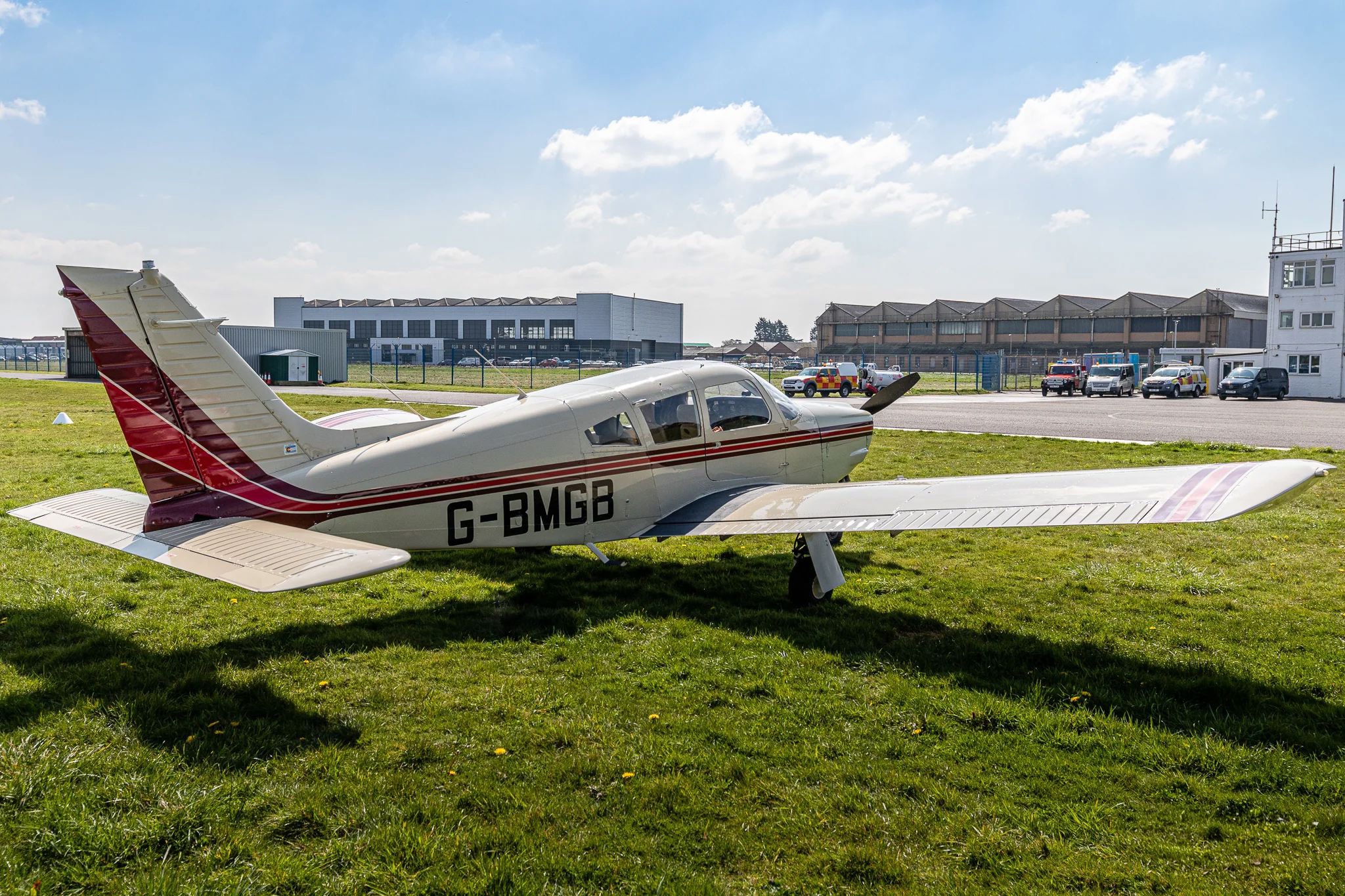
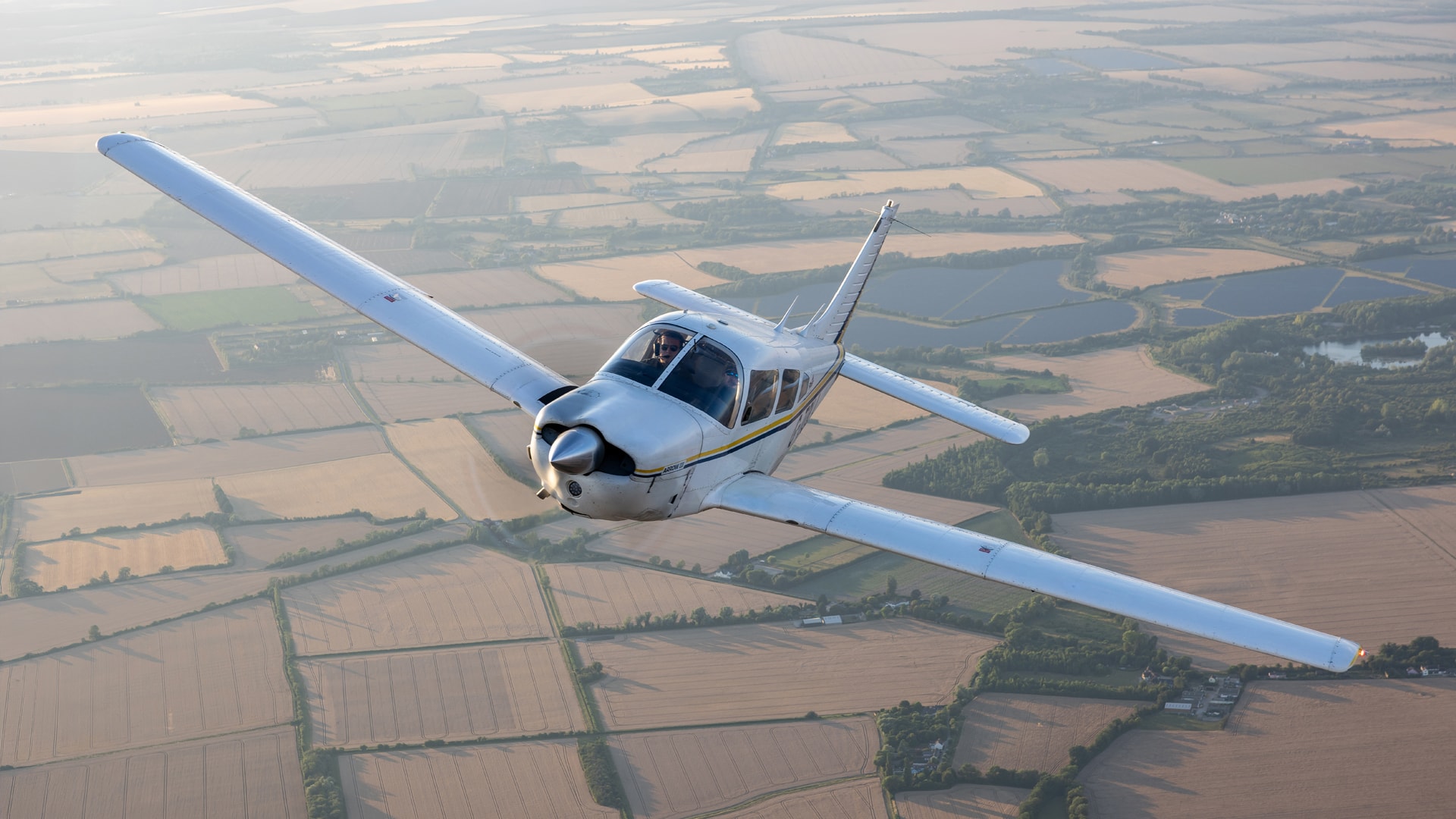
Meet the Training Fleet.
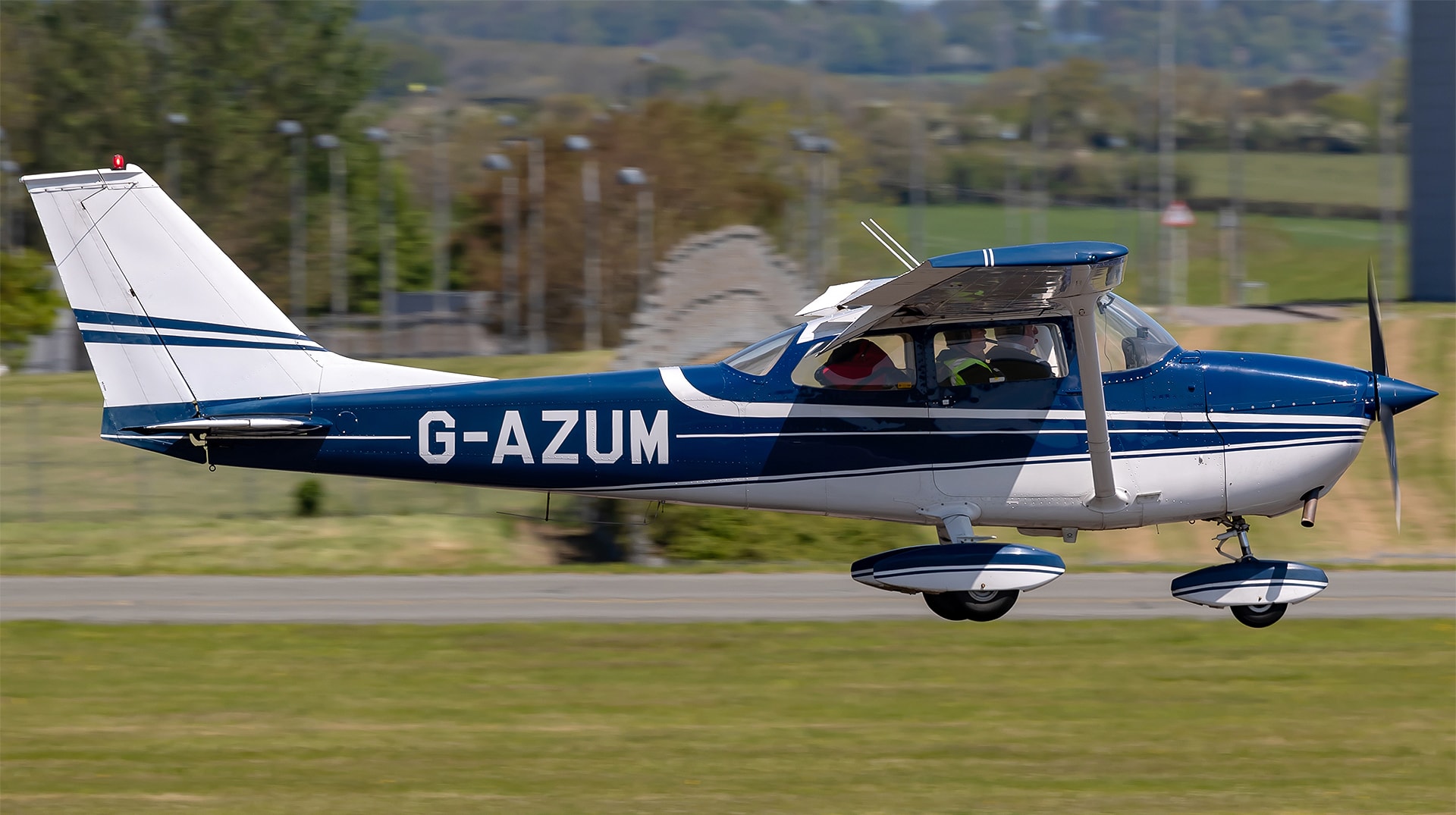
Course Details
Structure and Certifications.
Prerequisites
An applicant for an IR(Restricted) must produce logbook evidence of:
- 25 hours total experience as pilot of aeroplanes following PPL issue, including (b), (c) and (d) below
- 10 hours as Pilot in Command of aeroplanes, to include (c) below
- 5 hours as Pilot in Command on cross-country flights
- 15 hours as Pilot under Training in instrument flying with an instructor in a dual-controlled aeroplane (during the IMC course) — up to 5 hours of which may be in a JAR-STD qualified BITD, FNPT I, FNPT II, or up to 2 hours in other FSTDs recognised by the Authority
Holders of the EASA Basic Instrument Flying Module course completion certificate may have total flight training reduced by 10 hours. Holders of the AOPA (UK) Radio Navigation Certificate may have instrument flight training in the Applied Stage reduced by 5 hours. Additional credits — see CAP 804 Part 1 Subpart E.
IR(Restricted) privileges are contained within a UK national CPL(A) or ATPL(A) licence (not a JAA or EASA licence). There is no requirement for a separate certificate of test for these licences.
Teaching syllabus
Ground training develops a thorough understanding of operation in reduced visibility and low cloud, plus systems essential to aircraft operation. Under average conditions, at least 20 hours self-study is typically required, covering:
- Physiological factors
- Flight instruments
- AIS, AIP, NOTAMs, AICs
- Flight planning
- Meteorology
- Altimetry and terrain clearance
- Radio aids
- Radar approach procedures
- Privileges of the IR(Restricted)
Training syllabus
Minimum 15 hours instrument flying training in an aircraft, including:
- Full panel instrument flying (IF)
- Limited panel (IF)
- Partial panel (IF)
- Applied stage: departure and en-route; approach and let-down; bad weather circuits and landings
- Flight with asymmetric power (if multi-engine privileges are sought)
Total: 15 hours flight training in SEP or MEP class, plus approximately 1.5 hours skill test in SEP class. Skill test time is in addition to course syllabus hours (times approximate).
Tests and examinations
Skill test — complete all syllabus items and fly to skill test standard before the flight test. Our in-house Flight Examiner conducts the test; tolerances and conduct of the test are per CAP 804 Part 1 Subpart E. The skill test is charged at the hourly rate plus a test fee, in addition to syllabus hours.
Theoretical knowledge — essentially practical examination covering planning and execution of a typical flight under IFR outside controlled airspace notified under Schedule 7 to the ANO, including use of Aeronautical Information Publications and Recommended Aerodrome Operating Minima for IMC rating holders. Written paper conducted in-house; exam fee included in the quoted course price.
Frequenty Asked Questions
Your questions answered.
What experience do I need before starting?
25 hours total after PPL issue, including 10 hours PIC (5 hours cross-country), plus 15 hours dual instrument during the course (sim credit up to 5 hours where permitted).
Can prior training reduce my hours?
EASA Basic Instrument Flying Module may reduce flight training by 10 hours. AOPA (UK) Radio Navigation Certificate may reduce Applied Stage instrument training by 5 hours. See CAP 804 Part 1 Subpart E.
Is IR(R) valid on an EASA licence?
No — IR(Restricted) privileges are on UK national CPL/ATPL licences. Additional £25/hr applies if you also train toward EASA privileges in parallel.
How is ground school delivered?
Self-study for the teaching syllabus, with integrated briefings during flying. Formal classroom ground is optional and not part of the standard course unless you request it.
Which aircraft can I train on?
Normally our well-equipped Cessna 177RG Cardinal; PA-28 Arrow II/III and C172 are also available in our training fleet where suitable.
Full-time or part-time?
Both — minimum about five days full-time subject to weather, or part-time and ad-hoc by arrangement.
What about Cambridge or Cranfield approaches?
Additional approach charges apply at Cambridge or Cranfield — contact us when planning those sorties.
How do I book?
Email bookings@britishaerobaticacademy.com or call +44 (0)1763 208 281.